Yin Yoga, Fascia and the Nervous System
The Power of Slowing Down
A quiet conversation with the body
We live in a culture that often treats movement as another form of achievement. We are encouraged to go farther, work harder, stretch deeper, and measure our progress.
Yin yoga offers something different.
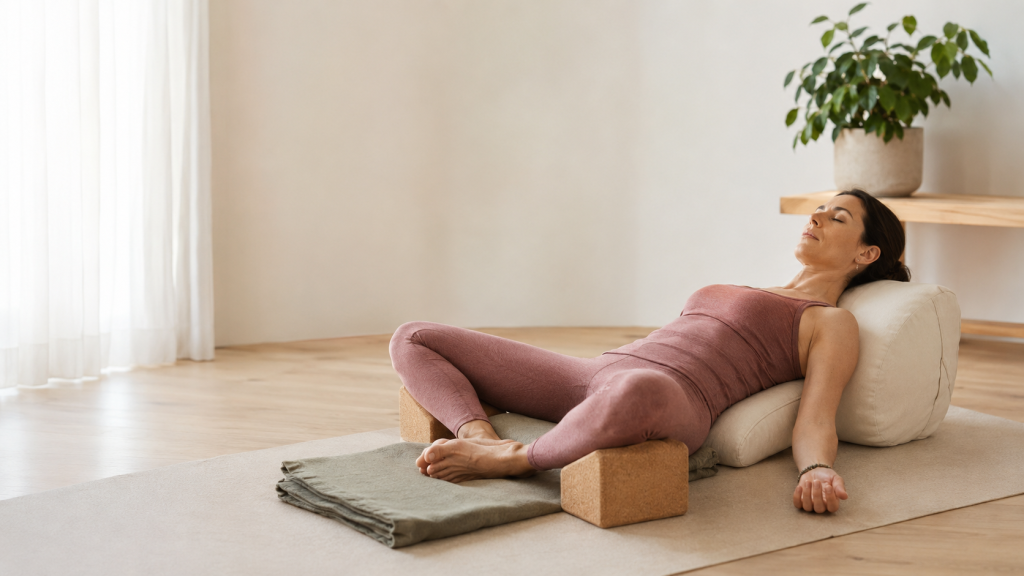
Instead of asking the body to perform, Yin yoga invites us to slow down, become still, and notice what is already present. Poses are generally held for several minutes and can be supported with bolsters, blocks, and blankets so the body has time to soften without being forced.
As a yoga teacher, licensed acupuncture physician, and practitioner specializing in fascia, somatic movement, and nervous-system health, I see Yin yoga as much more than a flexibility practice.
When approached with care, it can become a quiet conversation with the body.
Part One
What Makes Yin Yoga Different?
Unlike more active styles of yoga that focus strongly on muscular engagement and continuous movement, Yin yoga uses longer, relatively passive holds.
The intention is not to push as deeply as possible. It is to find an appropriate amount of sensation, remain attentive, and allow time to become part of the practice.
A Yin pose may be held for several minutes, but the body should still feel supported. Props can reduce unnecessary effort and make it easier to remain present without straining.
This slower approach can influence more than flexibility. It may also support the connective tissues, body awareness, breathing, and the way the nervous system responds to sensation and stillness.
Part Two
Yin Yoga and Fascia
Fascia is the continuous network of connective tissue that surrounds and connects muscles, bones, joints, nerves, blood vessels, and organs throughout the body.
It helps give the body structure while also allowing different tissues to move in relationship with one another.
Fascia responds to movement, pressure, hydration, injury, inactivity, and the repeated positions we assume throughout the day. Stress may also affect our physical patterns by changing muscle tone, breathing, posture, and how freely we move.
The long, gentle holds used in Yin yoga place slow and sustained tension through particular areas of the body. When the intensity is appropriate, this may support fascial mobility and help us explore places that feel stiff, guarded, or disconnected.
The purpose is not to aggressively "break up" fascia. Connective tissue does not need to be attacked or forced into release. A more useful approach is to provide gentle input, time, and variation while respecting the body's limits.
Sometimes less intensity allows the body to respond more fully.
Part Three
Supporting the Nervous System
Slowing down does not automatically create relaxation. For someone accustomed to staying busy or alert, becoming still may initially feel uncomfortable.
This is where Yin yoga can become a nervous-system practice.
In a supported pose, you have an opportunity to notice sensation while remaining in a safe and manageable position. You can feel the ground beneath you, observe your breathing, and recognize when you are tensing unnecessarily.
Over time, these small experiences may help the nervous system learn that sensation does not always require immediate reaction.
The practice can encourage a shift away from constant effort and toward the part of the nervous system associated with rest, digestion, and restoration. Many people notice that their breath becomes quieter, their muscles soften, and their thoughts begin to slow.
This does not mean every Yin practice will feel completely peaceful. Nervous-system regulation is not the same as being calm all the time. It is the ability to move between different states with greater flexibility and return more easily to balance.
Part Four
Yin Yoga and Emotional Awareness
When we slow down physically, we may become more aware of emotions that were difficult to notice while we were busy.
This is sometimes described as "releasing emotions stored in the fascia." I prefer to speak about it more carefully.
Emotions are not literally stored inside connective tissue in the same way an object is stored in a container. However, emotional experiences can influence breathing, posture, muscle tension, movement patterns, and how safe or guarded we feel within the body.
You might recognize this as a tight jaw during stress, lifted shoulders during anxiety, or a closed posture during a difficult period.
In the stillness of Yin yoga, these patterns may become more noticeable. A pose may bring up restlessness, sadness, frustration, vulnerability, or an unexpected sense of relief.
The goal is not to search for an emotional release or make something dramatic happen. It is simply to notice what arises without judgment and give yourself permission to adjust, move, pause, or rest when needed.
Part Five
Where Somatic Practice Fits In
The word somatic relates to experiencing the body from within.
Somatic practice shifts the focus away from what a pose looks like and toward what you are actually feeling. Rather than copying a shape perfectly, you become curious about your internal experience.
You might ask:
- Where do I feel support?
- Am I holding my breath?
- Can I reduce the intensity slightly?
- Do I feel safe remaining here?
- Would a prop help me soften?
- Does my body want stillness or a small movement?
These questions help restore a sense of choice.
A somatic approach to Yin yoga may include gentle rocking, swaying, pandiculation, breath awareness, or small intuitive movements before or after a longer hold. These movements can help the body transition gradually rather than moving abruptly from activity into complete stillness.
Somatics and Yin yoga work beautifully together because neither requires the body to perform. Both encourage listening, sensing, and responding.
Part Six
Practice With Me: Yin Yoga and Fascia Release
The practice below is designed to help you slow down, release accumulated tension, and reconnect with your body.
You will need a yoga bolster and a block. If you do not have a bolster, you can use firm pillows or a folded blanket instead.
Move gently, use your props generously, and remember that you never need to stay in a position that causes pain, numbness, tingling, or a sense of being trapped.
Try this 15-minute Yin yoga and fascia-release practice whenever you need a quiet transition out of stress and back into your body.
Part Seven
You Do Not Need to Force a Release
One of the most important lessons Yin yoga can teach us is that change does not always need to be forced.
The body often responds more readily when it feels supported rather than pushed. A comfortable prop, a slower breath, or permission to leave a pose early may be more beneficial than reaching the deepest possible position.
Yin yoga is not about enduring discomfort. It is about developing a more attentive relationship with sensation.
Some days, the practice may create a noticeable sense of openness or emotional relief. On other days, the benefit may simply be ten quiet minutes in which you listened to yourself.
Both experiences are valuable.
Part Eight
A Gentle Return to the Body
Yin yoga and somatic practices invite us to replace performance with curiosity.
Through slow fascial loading, supported stillness, internal awareness, and gentle movement, they may help improve mobility while supporting a more adaptable nervous system.
Perhaps most importantly, they give us an opportunity to practice being with the body rather than constantly trying to change it.
You do not need to become more flexible, completely calm your mind, or create a dramatic release. You only need to begin where you are, listen carefully, and allow the practice to meet you there.
This practice is intended for general education and wellness and is not a substitute for individualized medical care. Work within a comfortable range and consult an appropriate healthcare professional if you have an injury, medical condition, persistent pain, or concerns about whether Yin yoga is suitable for you.