Acupuncture and Holistic Support for Women's Health
A woman's body moves through many changes over a lifetime - from the beginning of menstruation through the reproductive years, perimenopause, menopause, and beyond.
These transitions are natural, yet they are not always easy.
Painful or irregular periods, premenstrual changes, disrupted sleep, fatigue, mood changes, hot flashes, digestive discomfort, and persistent stress can significantly affect how a woman feels in her daily life.
These concerns are often described as "hormonal imbalance." But hormonal health is not one fixed state that can be corrected with a single remedy.
Hormones communicate within a much larger system that is influenced by age, sleep, stress, nutrition, activity, medical conditions, and many other factors. This is why I approach women's health through the whole person rather than focusing on hormones alone.
As a licensed acupuncture physician, Chinese medicine practitioner, herbalist, yoga teacher, and specialist in nervous-system and fascia-focused practices, I bring these different areas together to offer individualized support through the changing seasons of a woman's life.
Part One
Looking Beyond the Symptom
In Chinese medicine, symptoms are understood as part of a larger pattern.
Two women may both experience painful periods, yet the nature of that pain may be very different. One may feel sharp, intense pain with significant tension, while another experiences a dull ache accompanied by fatigue and weakness.
Similarly, perimenopause can look different for each woman. One may struggle primarily with heat and night sweats, while another notices anxiety, poor sleep, headaches, exhaustion, or changes in her cycle.
Rather than assuming that every woman needs the same treatment, Chinese medicine considers how the symptoms relate to one another.
Sleep, digestion, energy, pain, emotional well-being, menstrual patterns, temperature, and stress can all provide information about what kind of support may be appropriate.
Part Two
Acupuncture for Women's Health
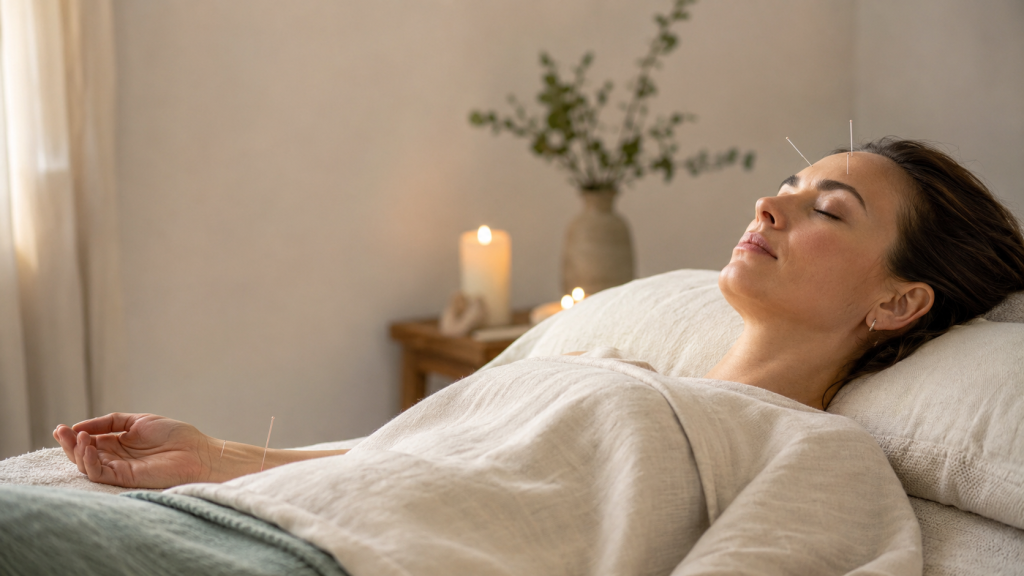
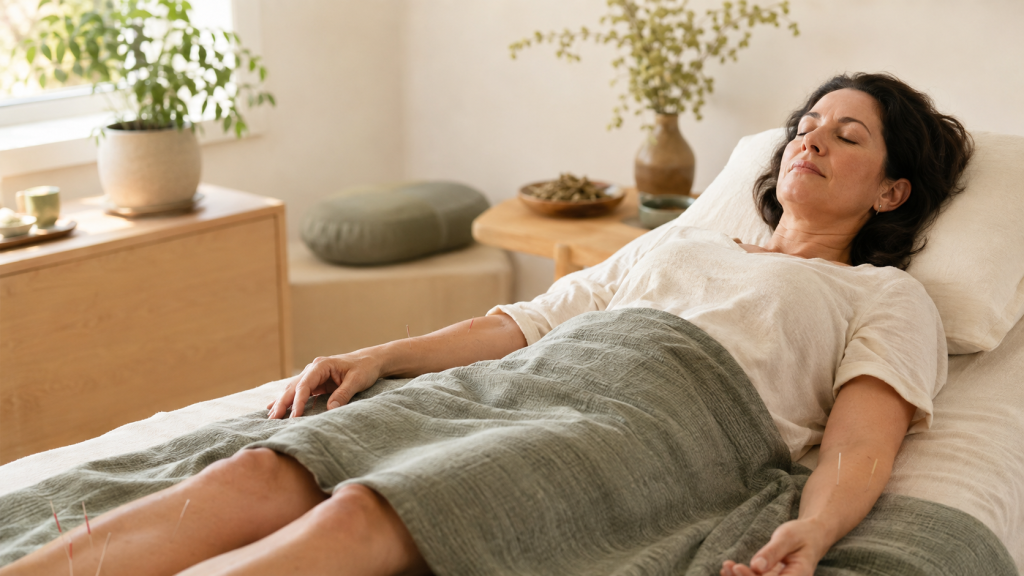
Acupuncture uses very fine, sterile needles placed at carefully selected points on the body. Treatment is individualized according to a woman's symptoms, constitution, and Chinese medicine pattern.
Acupuncture may be used as complementary support for concerns such as:
- Painful or uncomfortable periods
- Premenstrual tension and mood changes
- Stress and emotional overwhelm
- Sleep disturbances
- Headaches and muscular tension
- Changes experienced during perimenopause
- General well-being through menopause
- Fatigue and difficulty recovering from stress
Research into acupuncture for women's health continues to develop, and the strength of evidence differs depending on the condition.
The American College of Obstetricians and Gynecologists notes that acupuncture and acupressure may be useful for painful periods. Evidence for menopausal symptoms is less consistent: some studies report improvements, particularly when acupuncture is compared with no treatment, while comparisons with simulated acupuncture have produced mixed results.
Sources: ACOG: Dysmenorrhea- Painful Periods and NCCIH: Menopausal Symptoms
For this reason, I do not describe acupuncture as a treatment that simply "balances hormones." A more accurate way to understand it is as individualized care that may help manage certain symptoms, support overall well-being, and complement appropriate conventional treatment.
Part Three
Chinese Herbal Medicine
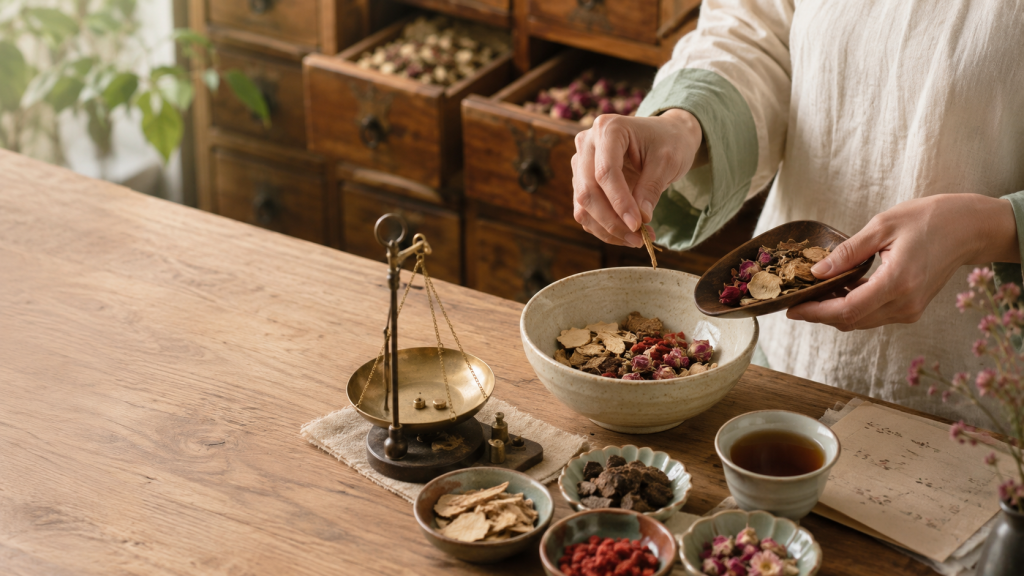
Chinese herbal medicine can provide another layer of individualized support.
Instead of selecting one popular herb for every woman with a particular symptom, Chinese medicine typically uses formulas constructed according to the complete pattern being presented.
A woman experiencing fatigue, feeling cold, and having a light menstrual cycle would not necessarily receive the same formula as someone experiencing irritability, heat, headaches, and a heavy cycle.
This individualized approach is one of the reasons I value herbal medicine so deeply.
Herbal formulas may be considered for concerns related to menstrual comfort, sleep, digestion, stress, energy, and transitions such as perimenopause. However, herbal medicine should be used thoughtfully.
Natural does not automatically mean safe for everyone. Herbs can interact with medications and may not be appropriate during pregnancy, before surgery, with hormone-sensitive conditions, or alongside certain medical treatments.
I consider herbal medicine complementary care-not a substitute for necessary evaluation, laboratory testing, or treatment from a gynecologist or another qualified healthcare professional.
Part Four
The Nervous System and Hormonal Health
The nervous system and hormonal system are constantly communicating.
Prolonged stress can influence sleep, digestion, appetite, energy, muscular tension, and how we experience pain. It may also make menstrual or menopausal symptoms feel more difficult to manage.
This does not mean stress causes every hormonal concern. Conditions such as endometriosis, polycystic ovary syndrome, thyroid disorders, fibroids, anemia, and other medical issues require appropriate diagnosis and care.
However, supporting the nervous system can still be an important part of the larger picture.
Acupuncture, adequate rest, gentle breathing, time outdoors, supportive relationships, and body-based practices may help create more space for recovery. When the system is not constantly responding to pressure, many women find that they feel more resilient and better able to cope with changes in their bodies.
Part Five
Yoga, Movement and Fascia
Movement can be a valuable part of women's health, but it does not always need to be intense.
During certain phases of the menstrual cycle, periods of high stress, or the transition into menopause, the body may benefit from a more adaptable approach.
Some days may call for strengthening and more active movement. Other days may be better suited to walking, gentle yoga, stretching, somatic movement, or rest.
Yoga may support sleep, stress management, mobility, and general well-being. Research suggests it may help with some menopausal symptoms, although its benefits may be similar to those of other appropriate forms of exercise.
Source: NCCIH: Yoga for Health
Fascia-focused and somatic practices can also help us notice physical patterns associated with stress—such as gripping through the abdomen, holding the breath, clenching the jaw, or creating unnecessary tension around the hips and pelvis.
These practices are not intended to physically manipulate or "release" the reproductive organs. Their value lies in encouraging mobility, breathing, body awareness, and a less forceful relationship with movement.
Part Six
My Approach to Women's Health
My approach brings together acupuncture, Chinese medicine, herbal knowledge, nervous-system support, and gentle movement.
I do not believe that every symptom can be explained by hormones, nor do I believe that one protocol is appropriate for every woman.
Instead, I look at the relationships between symptoms.
Pain may be influenced by muscular guarding and stress. Poor sleep may worsen fatigue and emotional sensitivity. Digestive concerns may affect how nourished and resilient a woman feels. Perimenopausal changes may become more difficult during an already demanding period of life.
Each of these pieces matters.
Depending on the individual, care may include acupuncture, an herbal formula when appropriate, lifestyle guidance, gentle movement, or simple practices that help the body feel more supported.
The goal is not to force the body into a perfect state. It is to provide thoughtful care that respects its changing needs.
Part Seven
When Symptoms Need Medical Evaluation
Holistic care works best when it is integrated with appropriate medical evaluation.
Very painful periods, unusually heavy bleeding, bleeding between periods, bleeding after menopause, sudden menstrual changes, persistent pelvic pain, or symptoms that interfere with daily life should not be ignored.
These signs do not always indicate a serious condition, but they deserve proper assessment.
Acupuncture, herbs, and movement can be valuable complementary tools, but they should never be used to delay necessary diagnosis or treatment.
Part Eight
Support Through Every Season
Women's health is not static. Our needs change with age, stress, life circumstances, and the natural transitions of the body.
There is no single perfect cycle, movement practice, or definition of hormonal balance that applies to every woman.
What matters is having care that listens to your experience and considers the complete picture.
Through acupuncture, Chinese herbal medicine, nervous-system support, and mindful movement, my intention is to help women feel more comfortable, connected, and supported within their bodies—at every stage of life.
This article is intended for general educational purposes and is not a substitute for medical diagnosis or treatment. Consult an appropriate healthcare professional about persistent symptoms, medication or supplement interactions, pregnancy, fertility concerns, or significant changes in your menstrual health.