Acupuncture for Stress and Burnout
Supporting the Body When It Has Been Doing Too Much for Too Long
Stress is a natural part of life. In short periods, it can help us respond to challenges, meet deadlines, and move through demanding situations. But when stress continues without enough opportunity for recovery, the body may begin to feel as though it is always "on."
You may feel tired but unable to relax. Your shoulders remain tense, your thoughts continue racing at night, and even small responsibilities begin to feel overwhelming. Sleep may become lighter, digestion may change, and the activities that once restored you may no longer feel like enough.
This is often how burnout develops—not simply as tiredness, but as a whole-body experience.
As a licensed acupuncture physician and Doctor of Oriental Medicine, I work with people who are carrying the physical and emotional effects of prolonged stress. My approach combines acupuncture and Chinese medicine with my background in somatic movement, yoga, fascia-focused therapy, and nervous-system support.
The goal is not to force your body to relax. It is to create the conditions in which your system can begin to feel safe enough to soften, regulate, and recover.
Part One
Stress Is More Than a Mental Experience
We often think of stress as something happening only in the mind. But the stress response involves the entire body.
When the nervous system perceives a threat or sustained demand, the body prepares to respond. Muscles tighten, breathing may become shallower, the heart may beat faster, and energy is directed toward immediate survival rather than rest, digestion, repair, and restoration.
This response is valuable when we need it. The difficulty comes when the body does not receive a clear signal that the stressful period has ended.
Over time, prolonged stress may be associated with symptoms such as:
- Persistent neck, shoulder, jaw, or back tension
- Difficulty falling asleep or staying asleep
- Fatigue that does not fully improve with rest
- Headaches or migraines
- Digestive discomfort
- Irritability, restlessness, or emotional sensitivity
- Difficulty concentrating
- Feeling disconnected from the body
- A sense of being simultaneously exhausted and wired
- Reduced resilience when facing everyday demands
These symptoms are real physical expressions of a system that has been working hard to protect you.
Part Two
How Chinese Medicine Understands Stress and Burnout
Chinese medicine looks at health through patterns rather than separating each symptom into an isolated problem.
Two people experiencing burnout may not present in exactly the same way. One person may feel tense, restless, and irritable, while another may feel depleted, emotionally flat, and profoundly fatigued. Someone else may experience digestive symptoms, headaches, disrupted sleep, or changes in the menstrual cycle.
From a Chinese medicine perspective, chronic stress commonly affects the smooth movement of qi throughout the body. Over time, prolonged strain may also deplete the systems responsible for nourishment, recovery, sleep, and emotional stability.
This is why acupuncture treatment is individualized. Rather than using one standard group of points for everyone with stress, I consider your particular combination of symptoms, energy, sleep, digestion, physical tension, emotional state, and overall health history.
Treatment is then designed around the pattern your body is presenting.
Part Three
How Acupuncture May Help with Stress
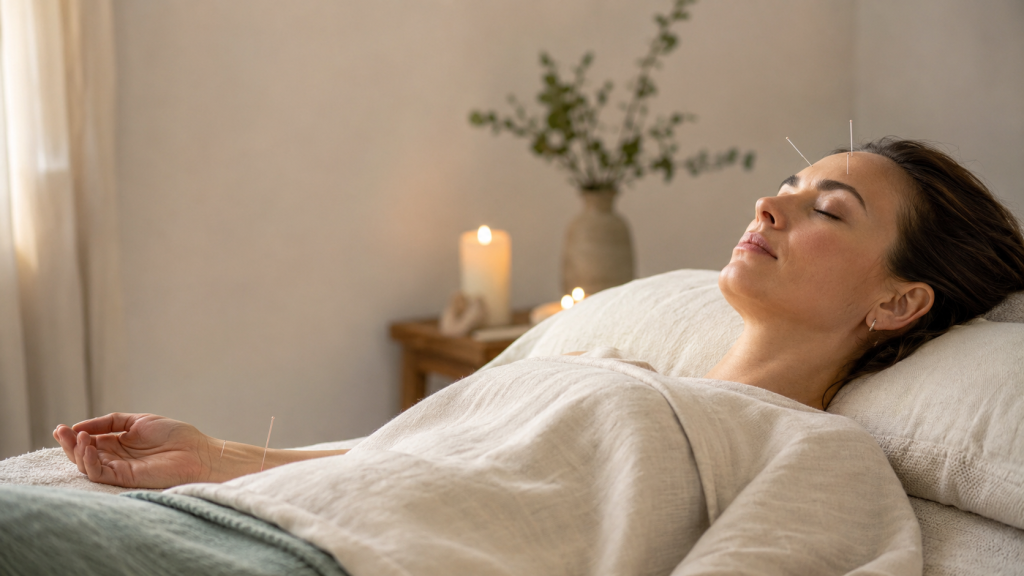
Acupuncture uses very fine, sterile needles placed at carefully selected points on the body. These points are chosen according to both your symptoms and your underlying Chinese medicine pattern.
Many people notice that during treatment their breathing becomes slower, their muscles begin to release, and their mind feels quieter. Some describe entering a deeply restful state that is different from simply lying down at home.
Research suggests that acupuncture may influence several systems involved in the stress response, including autonomic nervous-system activity and communication between the brain and body. While responses vary and acupuncture should not be presented as a cure for burnout, it may offer meaningful support as part of a broader recovery plan.
Depending on your individual needs, acupuncture may help support:
- A greater sense of calm
- More restful sleep
- Reduced muscular tension
- Relief from stress-related headaches
- Healthier digestion
- Improved energy and resilience
- A more balanced response to everyday stress
- A stronger sense of connection with the body
For many people, one of the most valuable aspects of acupuncture is having a protected period in which nothing is required of them. The body is given time, quiet, and therapeutic input without being asked to perform or achieve.
Part Four
Why Rest Alone Does Not Always Resolve Burnout
When someone is deeply depleted, being told to "just rest" can feel frustrating. Rest is important, but the body may have difficulty receiving it.
You might finally have time to sit down, yet still feel restless. You may go on vacation and remain mentally preoccupied. You may sleep for eight hours but wake feeling unrefreshed.
This does not mean you are failing at relaxation. It may mean that your system has adapted to remaining alert.
Recovery often happens through repeated, manageable experiences that communicate safety to the body. Acupuncture can become one of those experiences. Gentle movement, nourishing food, appropriate boundaries, time outdoors, supportive relationships, and professional care may all contribute as well.
Healing from burnout is rarely about finding one perfect technique. It is usually about reducing the demands placed on the system while gradually rebuilding its capacity.
Part Five
My Approach: Acupuncture, Fascia, and Somatic Awareness
My work is informed not only by Chinese medicine, but also by many years of experience with yoga, somatic movement, fascia-focused practices, and holistic health.
This background affects the way I view stress.
I pay attention to where the body is holding tension, how freely the breath is moving, and whether someone appears to need calming, grounding, nourishment, or gentle activation. When appropriate, I may also incorporate supportive techniques such as cupping, gua sha, bodywork, breathing guidance, or simple movement recommendations.
Fascia—the connective tissue network that surrounds and connects structures throughout the body—can become part of the physical experience of prolonged tension. Stress may influence posture, breathing patterns, jaw tension, and how freely we move.
Gentle somatic movement and fascia-focused practices can complement acupuncture by helping you notice habitual patterns without forcing the body into an intense stretch or performance-based exercise.
Sometimes the most therapeutic movement is small, slow, and attentive.
Part Six
What to Expect During an Acupuncture Appointment
Your first visit begins with a detailed conversation about what you have been experiencing. We may discuss your stress levels, energy, sleep, digestion, pain or tension, emotional well-being, and relevant medical history.
Chinese medicine diagnosis may also include observing the tongue and feeling the pulse.
Your treatment is then selected specifically for you. Once the needles are placed, you will rest quietly in a comfortable position. Acupuncture needles are extremely thin, and most people find treatment gentler than they expected.
You may notice heaviness, warmth, tingling, or a mild sensation around certain points. Many people become deeply relaxed or fall asleep during the session.
Afterward, you may feel calm, clear, tired, or simply more present in your body. Responses vary.
The number of treatments needed depends on how long your symptoms have been present, their intensity, and your overall health. Some people notice an initial change after one session, while longer-standing patterns may benefit from a consistent series of treatments. We can discuss an appropriate plan during your initial consultation.
Part Seven
Small Ways to Support Your Nervous System at Home
You do not need to create a complicated wellness routine. When you are already overwhelmed, adding more tasks can become another form of pressure.
Instead, choose one small practice that feels manageable.
Lengthen the Exhale. Without forcing the breath, allow your exhalation to become slightly longer than your inhalation. Try this for one or two minutes.
Feel Your Physical Support. Notice where your body meets the chair, floor, or bed. Let yourself feel the surface holding your weight.
Choose Gentle Movement. Slowly roll the shoulders, turn the head from side to side, or sway softly. Movement does not have to be intense to be beneficial.
Create a Transition Ritual. After work, change clothes, step outside, take a short walk, or wash your hands and face slowly. A simple ritual can help communicate that one part of the day has ended.
Reduce Unnecessary Stimulation. If possible, create a few minutes without a phone, television, conversation, or background noise. Your system may need less input before it needs another technique.
These practices are not meant to become another standard you must meet. Think of them as brief invitations to return to your body.
Part Eight
You Do Not Have to Wait Until You Completely Burn Out
Many people seek help only after their symptoms become impossible to ignore. But you do not need to wait until your body forces you to stop.
Persistent tension, poor sleep, irritability, digestive changes, and ongoing exhaustion can all be signs that your system needs more support.
Acupuncture offers a gentle, individualized way to care for the body during periods of prolonged stress. It cannot remove every source of pressure from your life, but it may help you feel more supported as you recover, restore your energy, and reconnect with yourself.
Your body is not working against you. It may simply have been protecting you for too long without enough opportunity to feel safe, nourished, and restored.
Ready to Begin?
If you have been feeling overwhelmed, depleted, tense, or unable to fully relax, I invite you to schedule an initial acupuncture consultation.
Together, we will look beyond the surface symptoms and create a treatment approach based on what your body needs now.
Acupuncture is a complementary healthcare practice and is not a substitute for necessary medical or mental-health care. Persistent or severe symptoms should be evaluated by an appropriate licensed healthcare professional.